A boiler leaking water is never something to ignore. Even a small drip can be a sign that pressure is too high, a seal has failed, a pipe connection has loosened or an internal part is starting to wear. In some cases, the issue may be simple to fix. In others, it can lead to water damage, electrical problems or a full boiler breakdown if left unchecked.
If you have spotted water under your boiler, around the pipework or dripping from the appliance itself, the safest first step is to stay calm and avoid touching anything inside the boiler. There are a few checks you can do safely from the outside, but boiler leak repairs should always be handled by a qualified engineer.
At The Boiler Co. NE, we help homeowners deal with leaking boilers, pressure faults, breakdowns and ongoing heating problems.
This guide explains why boilers leak, what you should do if you find a leak and when to call us for professional boiler repairs.
Is a leaking boiler dangerous?
A leaking boiler is not always immediately dangerous, but it should always be taken seriously. Water and boilers do not mix well, especially when the leak is near electrical components or internal parts. A leak can also point to pressure problems, corrosion or a fault that may get worse over time.
The level of risk depends on where the leak is coming from, how much water is leaking and whether there are any other warning signs. A slow drip from a pipe joint may not be an emergency, but it still needs fixing. Water dripping from inside the boiler casing is more concerning and should be checked by an engineer as soon as possible.
You should treat the situation as urgent if:
- Water is leaking heavily
- Water is near electrical fittings
- The boiler display is flickering or has gone blank
- The boiler pressure is too high or too low
- The boiler keeps cutting out
- You can smell gas
- There are signs of burning, staining or unusual noises
- The leak is damaging walls, flooring or cupboards
If you smell gas or suspect a gas leak, do not use the boiler. Open windows and doors, avoid using electrical switches, do not smoke, avoid naked flames, turn off the gas at the meter if it is safe to do so and call the National Gas Emergency Service on 0800 111 999.
What should you do if your boiler is leaking water?
If your boiler is leaking, there are a few steps you can take before an engineer arrives. These checks are about reducing damage and staying safe, not repairing the boiler yourself.
First, try to identify where the water appears to be coming from without removing the boiler casing. Look around the pipework, underneath the boiler and nearby valves. Do not open the casing or touch internal parts.
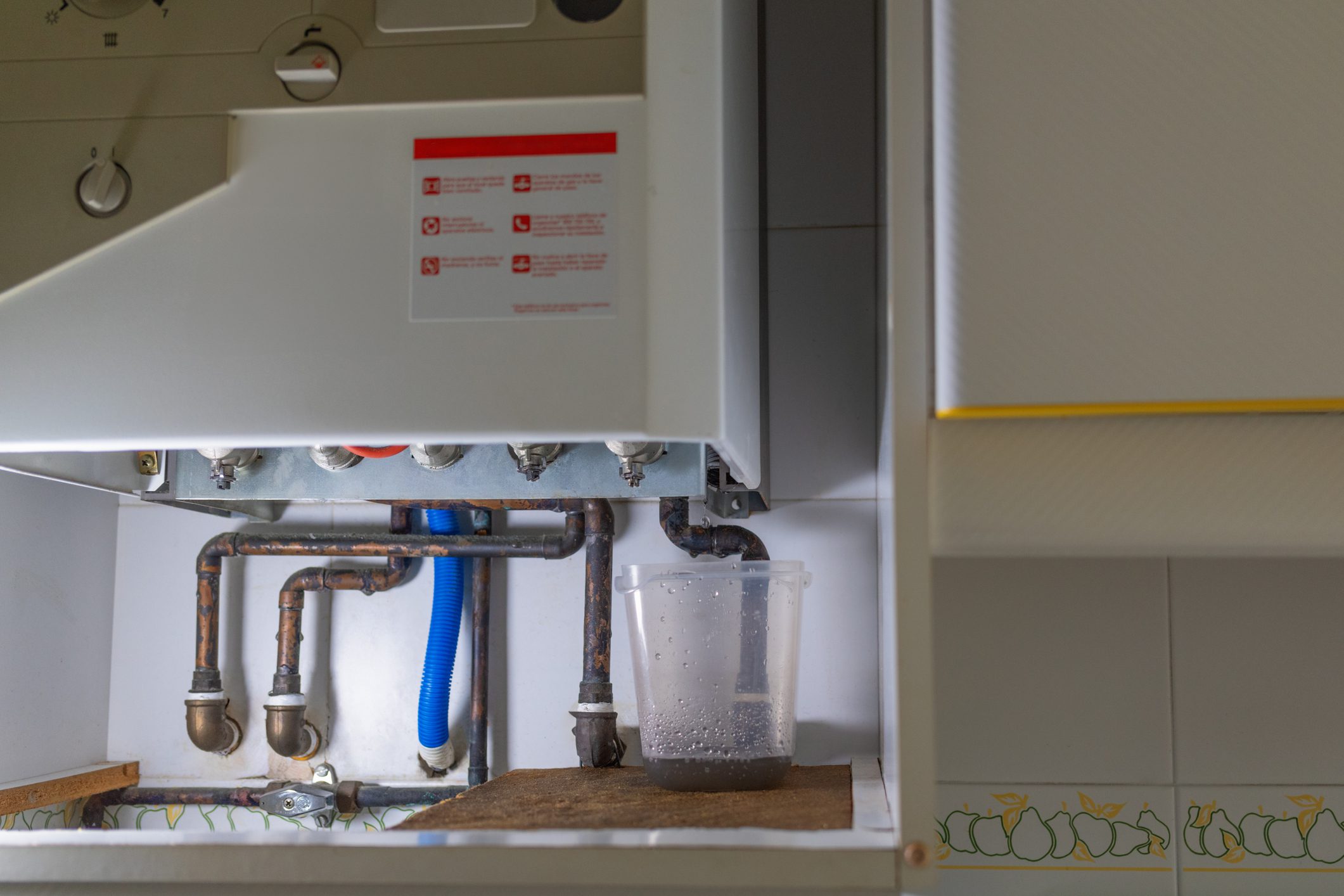
If there is a lot of water, place a bowl or towel underneath the leak where it is safe to do so. Keep water away from electrical sockets, switches and appliances.
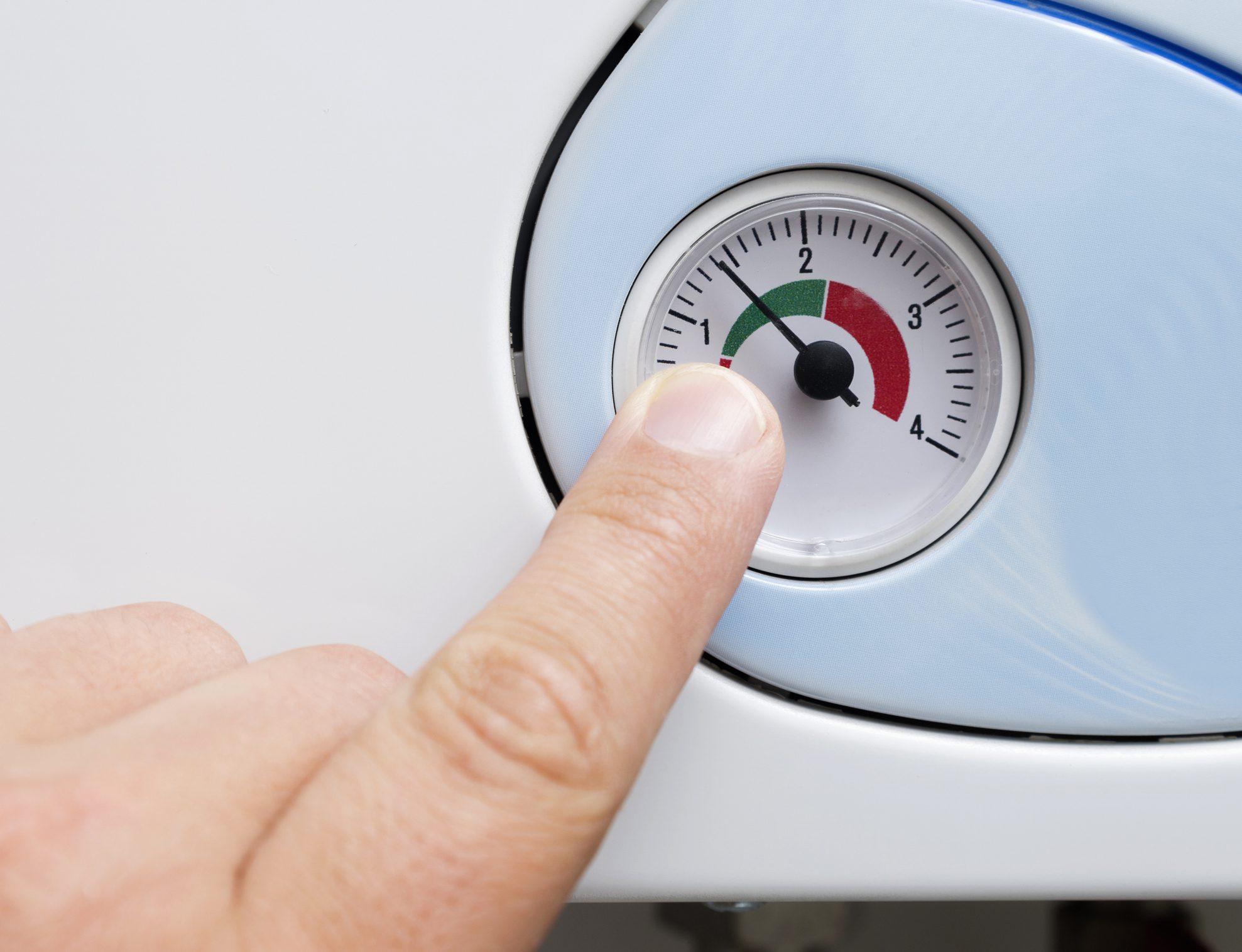
Next, check the pressure gauge. On many boilers, normal pressure is usually around 1 to 1.5 bar when the system is cold, although you should always check your boiler manual for the correct range. If the pressure is very high, this could be linked to the leak. If the pressure is very low, the leak may have caused the boiler to lose water.
If the leak is heavy or water is near electrics, switch the boiler off at the mains if it is safe to do so. If you are unsure, leave it alone and call an engineer.
Once the immediate risk is managed, book professional boiler repairs. A leak is not something to leave and hope it dries up on its own.
Why is my boiler leaking water?
There are several reasons why a boiler may leak water. Some are linked to age and wear, while others are caused by pressure problems, poor installation, corrosion or failed components.
Common causes include:
- High boiler pressure
- Loose pipe connections
- Failed seals or washers
- Corroded pipework
- A faulty pressure relief valve
- A problem with the expansion vessel
- A cracked heat exchanger
- Condensate pipe issues
- Poor installation or old fittings
- Internal component failure
The location of the leak can give useful clues, but it does not always tell the full story. For example, water may drip from one place but actually come from a different part of the boiler or pipework. This is why a proper inspection is important.
High boiler pressure
High boiler pressure is a common cause of leaks. When the pressure in the heating system rises too high, the boiler may release water through the pressure relief valve. This is a safety feature designed to protect the system from excess pressure.
You may notice water dripping from a small copper pipe outside the property. This pipe is often connected to the pressure relief valve. If water is coming from this pipe, the system may be over-pressurised or the valve may not be sealing properly.
High pressure can happen if the filling loop has been left open, the boiler has been overfilled or there is a problem with the expansion vessel. It can also happen if the system pressure rises sharply when the heating is on.
If your boiler pressure keeps climbing, do not keep releasing water yourself without understanding the cause. The pressure may rise again and the underlying fault will still be there. An engineer can test the expansion vessel, check the filling loop and inspect the pressure relief valve.
Low boiler pressure after a leak
A leaking boiler can also cause low pressure. As water escapes from the system, the pressure drops. Many boilers will stop working if the pressure falls too low, which may leave you with no heating or hot water.
You may be able to top up the boiler pressure using the filling loop, but only if you know how to do it safely and the leak is not serious. If water continues to escape, topping up the pressure is only a short-term measure. The system will keep losing water until the leak is repaired.
Repeatedly topping up the pressure can also introduce fresh water into the heating system, which may increase the risk of corrosion over time. If pressure keeps dropping, book boiler repairs so the leak can be traced and fixed properly.
Loose pipe connections
A leak from the pipework beneath the boiler may be caused by a loose connection, worn washer or failed fitting. This can sometimes happen after years of heating and cooling, as pipes expand and contract.
You might see water dripping from one of the pipes below the boiler or around an isolation valve. It may only happen when the heating is on, or it may continue even when the boiler is off.
Although this may look like a simple plumbing issue, you should still be careful. Pipes beneath a boiler can carry hot water, gas or system water, depending on their purpose. Do not tighten random fittings or valves unless you know exactly what they are. A qualified engineer can identify the pipe and repair the leak safely.
Failed seals inside the boiler
Boilers contain seals and washers that help keep water inside the parts it needs to pass through. Over time, these seals can wear, harden or fail.
If a seal fails inside the boiler, you may see water dripping from the bottom of the casing. This type of leak should always be checked by an engineer. Do not remove the boiler cover to look inside.
A failed seal may be relatively straightforward to repair if caught early. If left too long, water can damage other parts and turn a small repair into a bigger job.
Corrosion and old pipework
Corrosion is another common cause of boiler leaks, especially in older systems. Over time, metal pipework, valves or internal parts can corrode and weaken. Eventually, small holes can form and water begins to escape.
Rust marks, green staining around copper pipework or brown water marks near the boiler can all suggest corrosion. You may also notice that the system water looks dirty when radiators are bled.
Corrosion can be caused by age, oxygen in the system, poor water quality or a lack of inhibitor. If corrosion is widespread, an engineer may recommend more than a simple repair. Depending on the condition of the boiler, it may be time to discuss repair options, system cleaning or replacement.
If a boiler is old, leaking badly and becoming unreliable, replacement may be more cost-effective than repeated repairs. We can advise on repairs and boiler installations if your current boiler is no longer practical to keep fixing.
Faulty pressure relief valve
The pressure relief valve, often shortened to PRV, is designed to release water if boiler pressure gets too high. Once it has opened, it can sometimes fail to close properly again. This may leave you with a constant drip.
A faulty pressure relief valve can cause pressure loss, repeated topping up and water discharge outside. It may not be the only fault, as the valve may have opened because another issue caused high pressure in the first place.
An engineer can check whether the valve itself has failed or whether another part, such as the expansion vessel, is causing pressure to rise.
Expansion vessel problems
The expansion vessel helps manage pressure changes as water heats up and expands. If the expansion vessel is faulty, the boiler pressure may rise quickly when the heating is on, then drop again when the system cools.
This pressure movement can cause the pressure relief valve to discharge water. You may notice that the boiler pressure looks normal when cold, then rises too high during use.
Expansion vessel faults need professional testing and repair. In some cases, the vessel can be recharged. In others, it may need replacing.
Cracked heat exchanger
A cracked heat exchanger is one of the more serious reasons for a boiler leak. The heat exchanger is a key internal part that transfers heat from the burner to the water in the system.
If it cracks, water can leak inside the boiler. This is more common in older boilers or boilers that have suffered from corrosion, poor circulation or long-term stress.
A cracked heat exchanger can be expensive to repair. Depending on the boiler age, condition and parts availability, an engineer may advise that replacing the boiler is a better option. If you need a new boiler installed, we can talk you through suitable options for your home.
Condensate pipe leaks
Modern condensing boilers produce condensate, which is acidic waste water that should be carried safely to a drain through a condensate pipe. If this pipe is loose, blocked, cracked or poorly fitted, you may notice water leaking near the boiler or outside.
In cold weather, condensate pipes can also freeze. This can cause the boiler to shut down or show an error code. A frozen pipe is not always the same as a leaking boiler, but the symptoms can overlap.
If water is coming from a white plastic pipe or near the condensate route, an engineer can check whether the pipe is fitted correctly and draining as it should.
Can you use a boiler that is leaking water?
It depends on the leak. If the leak is small and clearly coming from external pipework, the boiler may still run, but that does not mean you should ignore it. Small leaks often get worse and can lead to pressure loss, damage or breakdown.
You should switch the boiler off and call an engineer if water is leaking from inside the boiler, near electrics or in large amounts. You should also stop using the boiler if there is a gas smell, burning smell or repeated fault code.
A leaking boiler should never be treated as normal. Even if it seems to be working, the safest approach is to get it checked.
Can you fix a leaking boiler yourself?
You can carry out simple checks from outside the boiler, but you should not try to fix internal boiler leaks yourself. Boiler casing should only be removed by a Gas Safe registered engineer.
Safe homeowner checks include:
- Looking at the pressure gauge
- Checking whether the filling loop is closed
- Placing a bowl under a drip if safe
- Turning the boiler off if water is near electrics
- Checking whether nearby pipework is visibly wet
- Making a note of any error codes
You should not:
- Remove the boiler casing
- Tighten unknown fittings
- Touch gas parts
- Open internal components
- Keep topping up pressure without fixing the leak
- Ignore signs of corrosion
- Use the boiler if you think it is unsafe
A leak may look minor from the outside, but the cause may be more serious. Professional diagnosis is the safest option.
How can regular servicing help?
An annual boiler service can help spot early signs of leaks, corrosion, pressure problems and wear. During a service, an engineer can check the boiler is operating safely, inspect visible components and identify issues that may lead to breakdowns.
Servicing cannot prevent every leak, but it can help catch problems before they become more expensive. It can also support warranty requirements for many boilers.
If your boiler has not been serviced for a while and you have noticed pressure changes, small drips or staining around pipework, it is worth booking a visit before the issue gets worse.
When should you call an engineer?
You should call an engineer if:
- Your boiler is leaking from inside the casing
- The leak is getting worse
- The pressure keeps dropping
- The pressure keeps rising too high
- You need to top up the boiler often
- Water is near electrics
- The boiler keeps locking out
- There are signs of corrosion
- You can see water around pipework or valves
- You are unsure where the leak is coming from
The sooner a leak is checked, the easier it may be to repair. Leaving it too long can cause further damage to the boiler and surrounding areas.
Boiler leaking water? The Boiler Co. NE can help
If your boiler is leaking water, we can help you find the cause and decide on the safest next step. At The Boiler Co. NE, we deal with leaks, pressure faults, damaged parts and boiler breakdowns for homeowners who want clear advice and reliable workmanship.
Whether your boiler needs a simple repair, a part replaced, an annual boiler service or advice on replacement, we can take a look and explain your options.
For professional boiler repairs or help with a leaking boiler, please get in touch with us today.
FAQs about leaking boilers:
Why is my boiler leaking water from underneath?
A boiler leaking from underneath may have a failed seal, loose pipe connection, pressure issue, corroded part or internal leak. Do not remove the casing to check inside. If water is coming from the boiler itself, arrange a repair.
Is a small boiler leak serious?
A small leak may not seem serious at first, but it can become worse. It can also point to pressure problems, corrosion or worn parts. It is best to get even a small leak checked before it causes more damage.
Should I turn my boiler off if it is leaking?
If the leak is heavy, water is near electrics or water appears to be coming from inside the boiler, turn it off if it is safe to do so and call an engineer. If you are unsure, leave the boiler alone and get professional advice.
Why does my boiler pressure keep dropping?
Boiler pressure can drop because water is escaping from the system. This may be due to a visible leak, a hidden pipe leak, a faulty pressure relief valve or an expansion vessel problem. Repeated pressure loss should be checked by an engineer.
Can a leaking boiler cause no heating or hot water?
Yes. If the leak causes the pressure to drop too low, the boiler may stop working and leave you without heating or hot water. The boiler may also lock out to protect the system.
Does a leaking boiler mean I need a new one?
Not always. Many leaks can be repaired, especially if they are caused by a valve, seal or external pipe connection. However, if the boiler is old, badly corroded or has a cracked heat exchanger, replacement may be the better option.