Low boiler pressure is annoying, but it’s also a useful warning that something isn’t right. You can often fix simple issues yourself, and you’ll know when to call a professional for the rest.
How does boiler pressure work and what’s “normal”?
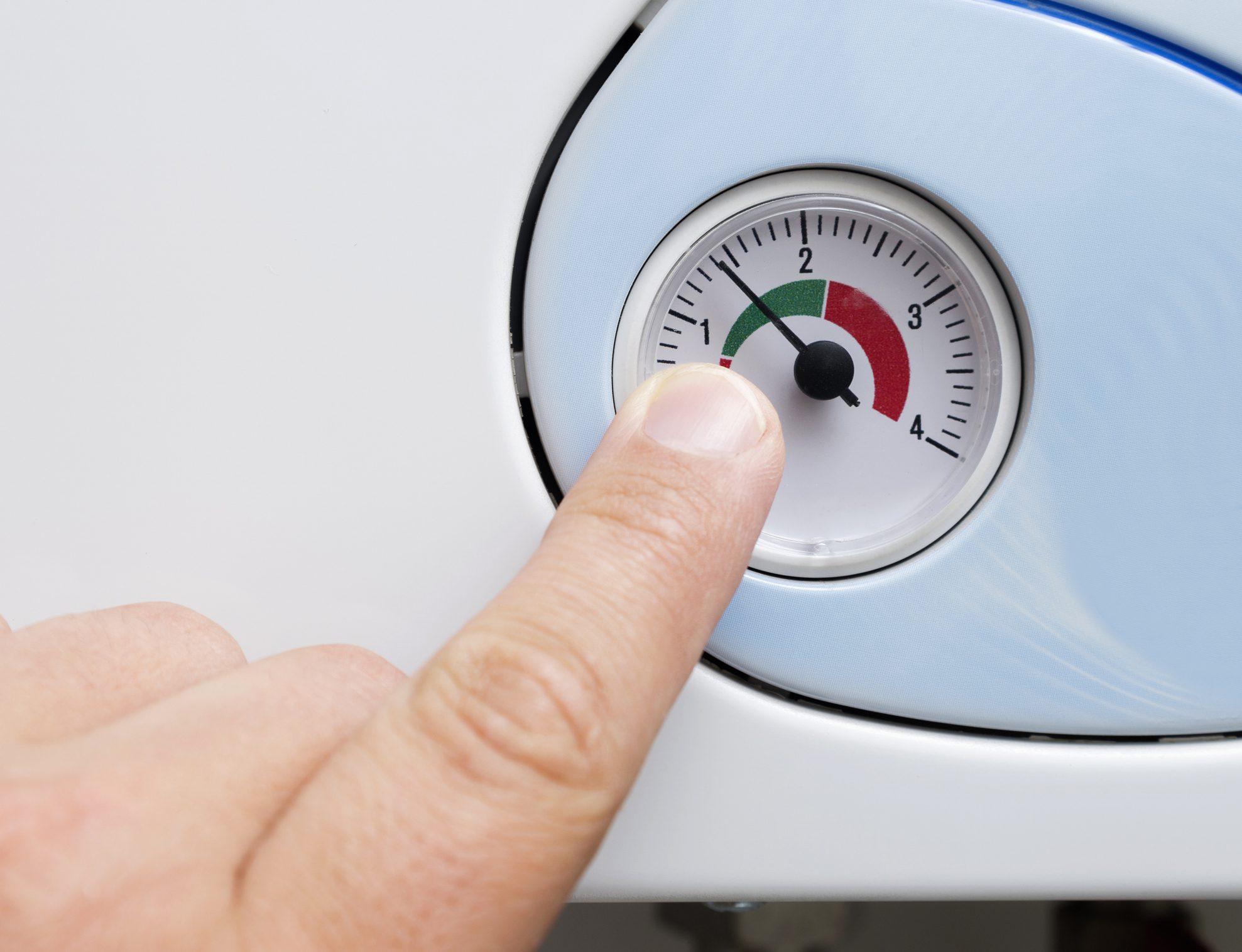
Your heating is a sealed, pressurised system. Water expands as it heats up and contracts as it cools. The boiler’s pressure gauge shows the force in that closed loop.
- Cold (off): aim for ~1.0–1.5 bar.
- Hot (running): expect a rise (often ~1.8–2.2 bar).
- 3 bar: safety devices will usually discharge water to protect the system.
If your gauge sits below 1 bar when cold, you have low pressure. If it climbs rapidly towards 3 bar when hot, the system can’t absorb expansion properly.
Which types of boilers lose pressure most often?
- Combi boilers and system boilers use sealed systems, so pressure loss shows quickly on the gauge.
- Regular (heat-only) boilers with a loft tank don’t use a sealed loop in the same way, so “pressure loss” symptoms show differently (overflow, air ingress, poor circulation).
If you’re unsure which you have, look for a filling loop (a silver braided hose or built-in filler): that’s a sealed system.
What warning signs should you watch for?
- Radiators go cool at the top or stay lukewarm.
- Boiler shows a low-pressure error or keeps locking out.
- Gauge drops slowly over days or sinks fast within hours.
- Boiler pressure rises high when heating is on, then dumps water outside.
What causes a boiler to lose pressure?
1) Could a visible leak drop your pressure?
Yes. Even a pin-hole leak lets water escape and pressure fall.
Where to look:
- Radiator valves (especially TRVs and lockshields).
- Radiator bottoms and towel rails (rust marks, green/white crust).
- Pipe joints near the boiler and under kitchen sinks.
- The pressure relief valve (PRV) discharge pipe outside (usually copper). Drips here = the system is venting water.
Homeowner check: wipe joints dry and revisit later; fresh moisture suggests a leak. If you find any, don’t keep topping up – book a repair.
2) What if there’s no obvious drip – could the leak be hidden?
Yes. Leaks can sit under floors, behind plaster, or in screed.
Clues:
- Pressure falls steadily every day even with heating off.
- Stains on ceilings or skirting boards without a clear source.
Engineer test (for sealed systems): they may isolate the boiler from the wider system to see whether the boiler or the pipework is losing pressure. This avoids ripping up floors blindly.
3) Is the pressure relief valve (PRV) stuck or passing?
It can be. The PRV opens around 3 bar to protect the system. Debris or limescale can stop it reseating fully, causing a constant tiny drip out of the discharge pipe.
Clues:
- A wet patch beneath the outside copper discharge pipe.
- Pressure drops even when the system is off.
- You’ve accidentally overfilled the system previously (this can damage the PRV seat).
Fix: PRVs are a Gas Safe job. They’re replaceable, and the root cause (often expansion issues) must be checked too.
4) Could the expansion vessel be the real problem?
Often. The expansion vessel has an air-or nitrogen-charged diaphragm that absorbs water expansion. If the charge is lost or the membrane fails:
Clues:
- Pressure rises fast when heating starts, then the PRV drips.
- After cooling, the gauge drops below 1 bar again.
- You find yourself topping up frequently.
Fix: An engineer will check/recharge the vessel or replace it. Chronic topping-up adds oxygen to the system, accelerating corrosion – so don’t ignore this.

5) Did bleeding radiators cause the drop?
Likely. Letting out air also reduces system pressure.
Fix: Repressurise after bleeding (see step-by-step below). If you need to bleed often, you may have air ingress or micro-leaks that need attention.
6) Can the boiler itself leak internally into the condensate?
Yes. A cracked or perforated heat exchanger can send system water into the condensate drain.
Clues:
- No visible drips anywhere, but pressure still falls.
- A steady trickle of condensate when the boiler is cold.
- Repeated lockouts with no external leak found.
Fix: This is an engineer diagnosis and repair/replace decision.
7) Could the pressure gauge or sensor be lying?
Occasionally. A lazy gauge or faulty transducer can mislead you.
Clues:
- Readings jump around without pattern.
- Radiators heat well and the boiler behaves normally despite “low pressure”.
Fix: An engineer can confirm with a test gauge and replace the sensor/gauge if needed.
8) Does sludge or poor water quality cause pressure loss?
Indirectly. Sludge can overheat local sections of the system, trigger boiling, and nudge pressure high enough to open the PRV, slowly losing water.
Clues:
- Some radiators stay stubbornly cool at the bottom.
- Dirty water when bleeding.
- Frequent need to top up combined with poor radiator performance.
Fix: System clean, inhibitor, and ideally a magnetic filter.
What safe checks can you do before calling an engineer?
How do you repressurise a sealed system with a filling loop?
- Turn off the boiler and let it cool.
- Find the filling loop: a silver braided hose (external) or a built-in filler (keyed/keyless).
- Open the valves slowly to let mains water in – watch the gauge rise.
- Stop around 1.3–1.5 bar (cold).
- Close both valves firmly.
- Turn the boiler back on and run the heating.
- Re-check after 10–15 minutes. If it climbs towards 3 bar, switch off and call an engineer.
Tip: After bleeding radiators, the gauge will drop again. Top up back to 1.3–1.5 bar cold.
How do you recognise the two common filler types?
- External braided loop: two small quarter-turn taps. You may need a flathead screwdriver.
- Built-in filler: a plastic key or lever beneath the boiler. Turn/press to fill, then return to the locked position.
What should you never do when topping up?
- Don’t exceed ~1.5 bar cold just to “be safe”.
- Don’t keep topping up daily; that adds oxygen and speeds corrosion.
- Don’t cap or block a dripping PRV discharge. That’s a vital safety outlet.
- Don’t add leak sealant as a first step – it can mask and complicate proper repairs.
How do you tell if the issue is in the boiler or the wider system?
A common engineer approach is to isolate the boiler from the heating circuit (using the boiler’s flow/return isolation valves) and then monitor pressure:
- Pressure still falls while isolated → likely inside the boiler (e.g., heat exchanger, PRV).
- Pressure holds while isolated → likely a system leak (pipework, radiators, valves).
This test keeps guesswork and disruption to a minimum.
What maintenance helps prevent pressure loss?
- Annual service to check combustion, safety devices, PRV, expansion vessel, and flue.
- System inhibitor to reduce corrosion and gas (air) formation.
- Magnetic filter on the return pipe to catch sludge.
- Quick leak fixes: treat small drips immediately.
- Post-bleed top-ups: always repressurise after releasing air.
- Pressure log in winter: a quick weekly glance at the gauge spots issues early.
When is repair better – and when is replacement smarter?
Choose repair when:
- The boiler is younger and parts are readily available.
- The fault is confined (e.g., PRV stuck, sensor failed).
- Pressure loss is due to a localised leak you can access.
Consider replacement when:
- The boiler is 10–15+ years old and faults are frequent.
- The heat exchanger has failed and parts are costly.
- Efficiency is poor and bills are high even when working.
A transparent quote that compares repair now + likely future spend vs new, efficient boiler with warranty helps you decide with confidence.
What quick FAQs cover the last pieces of the puzzle?
Can you run the heating with low pressure?
No. Many boilers will lock out to protect themselves. Running at low pressure risks damage and poor circulation.
How often should you need to top up?
Occasional top-ups (e.g., after bleeding) are normal. Regular top-ups (weekly or more) point to a leak, a PRV or expansion issue, or air ingress.
Why does pressure rise when the heating is on?
Water expansion. A small rise is normal. A big jump suggests the expansion vessel needs attention.
Why does pressure fall overnight?
Cooling contracts the water, so the gauge drops slightly when cold. A steady daily drop points to a leak or a passing PRV.
Is repressurising safe for homeowners?
Yes – slowly and carefully, and only on the filling loop. Stop at ~1.3–1.5 bar cold. Anything beyond that or any repeating drop needs an engineer.
Need fast, safe help with boiler pressure loss?
Low pressure won’t fix itself. If you’re topping up often, seeing drips at the discharge pipe, or the gauge climbs towards 3 bar when heating is on, you need a professional diagnosis. The Boiler Co. NE finds the root cause, fixes it properly, and protects your system for the long term.
Book your boiler repair today to restore steady pressure and reliable heating.